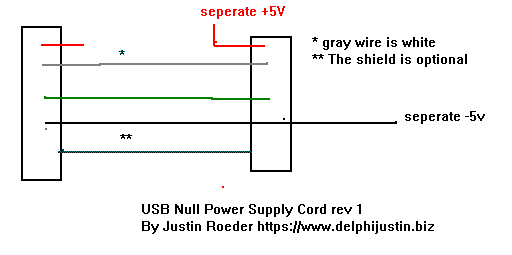
One time I read an Nuts and volts article where this guy took a usb cord and unhooked the +5v(red wire) and made it where the arduino can be powered by an external power supply without breaking anything.. This can be also handy for power hungry devices(such as external dvd burners,etc). This will draw nothing on the computer.
Schematic Diagram Left side is the computer Right side is the USB device
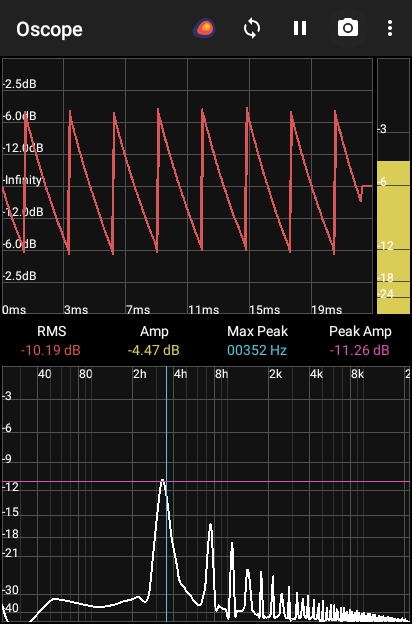
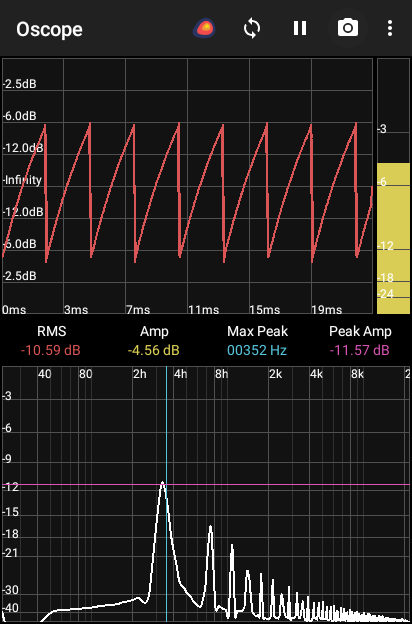
In this blog I will review the Virtins Soundcard probe using it on a chromebook. Chromebooks use a 4-pin headphone not a 3-pin connector like PCs and regular laptops use. Here comes the interesting part when measuring a sawtooth wave it was going backwords seen on figure 1
Figure 1 sawtooth in the wrong direction
Figure 2 Sawtooth going the right direction
What can that do to the circuit?
If you are using a 3-prong chromebook or are hooked up to a 3-prong charger you would have to be extra careful where you connect the ground clip. If wrong BANG you can blow your circuit up, break the probe, blow your hand right off(if enough current),make a big spark.
How can I fix it?
You can cut the RCA adapter cord or get a spare RCA Cord with one end RCA female and the other end male(like an extension cord). and solder the wires opposite.. Where the tip of the RCA on one end goes to the shield and the shield to the tip. The polarity is only wrong for Android and Chromebooks. I choose to use 2 extra RCA cords just because the ones on the adapter is short and also be able to unhook it and use it direct carefully if the extra cord exposes it to RF. I think its already correct for apple devices like iPhones and iPads.
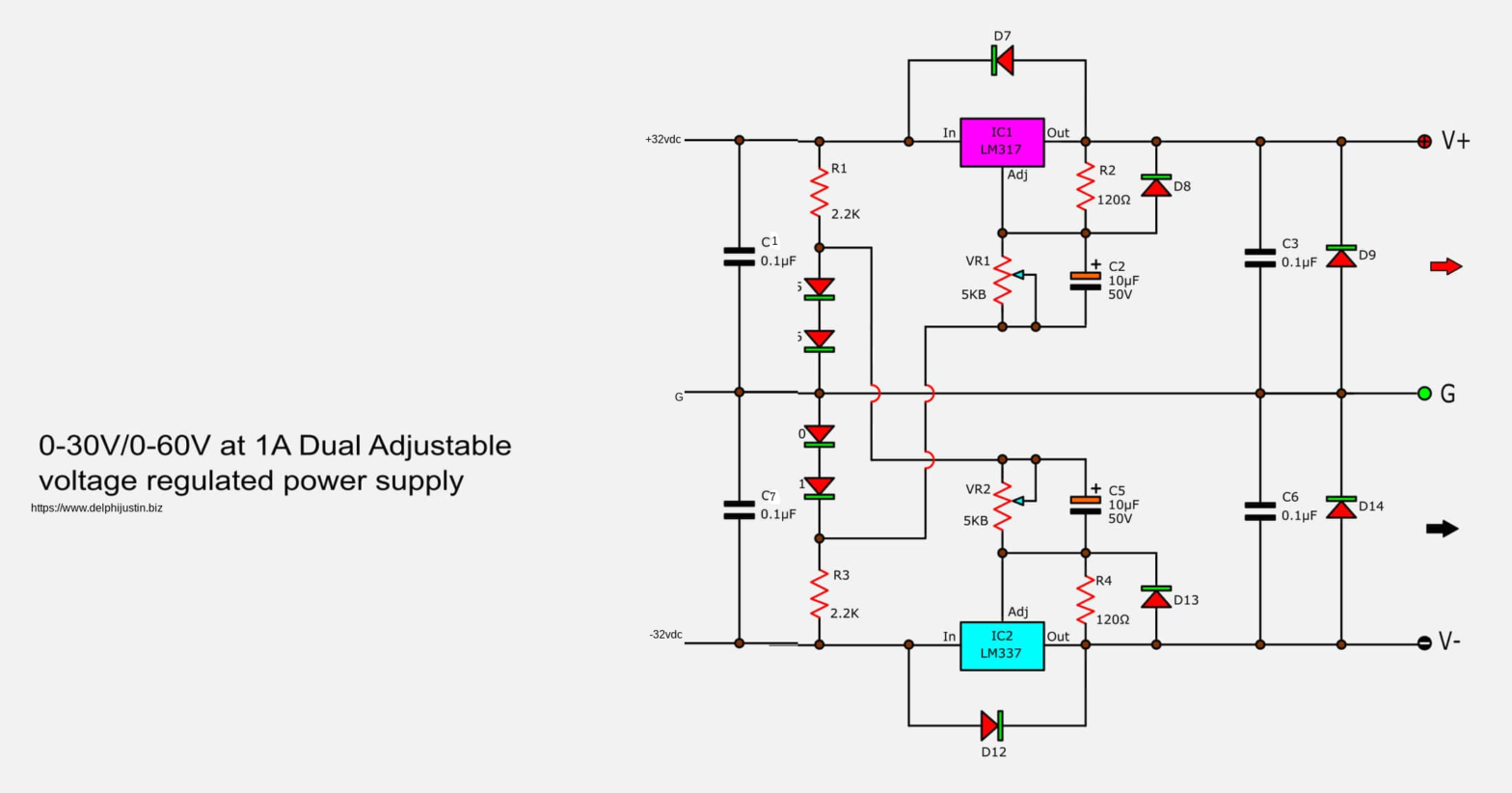
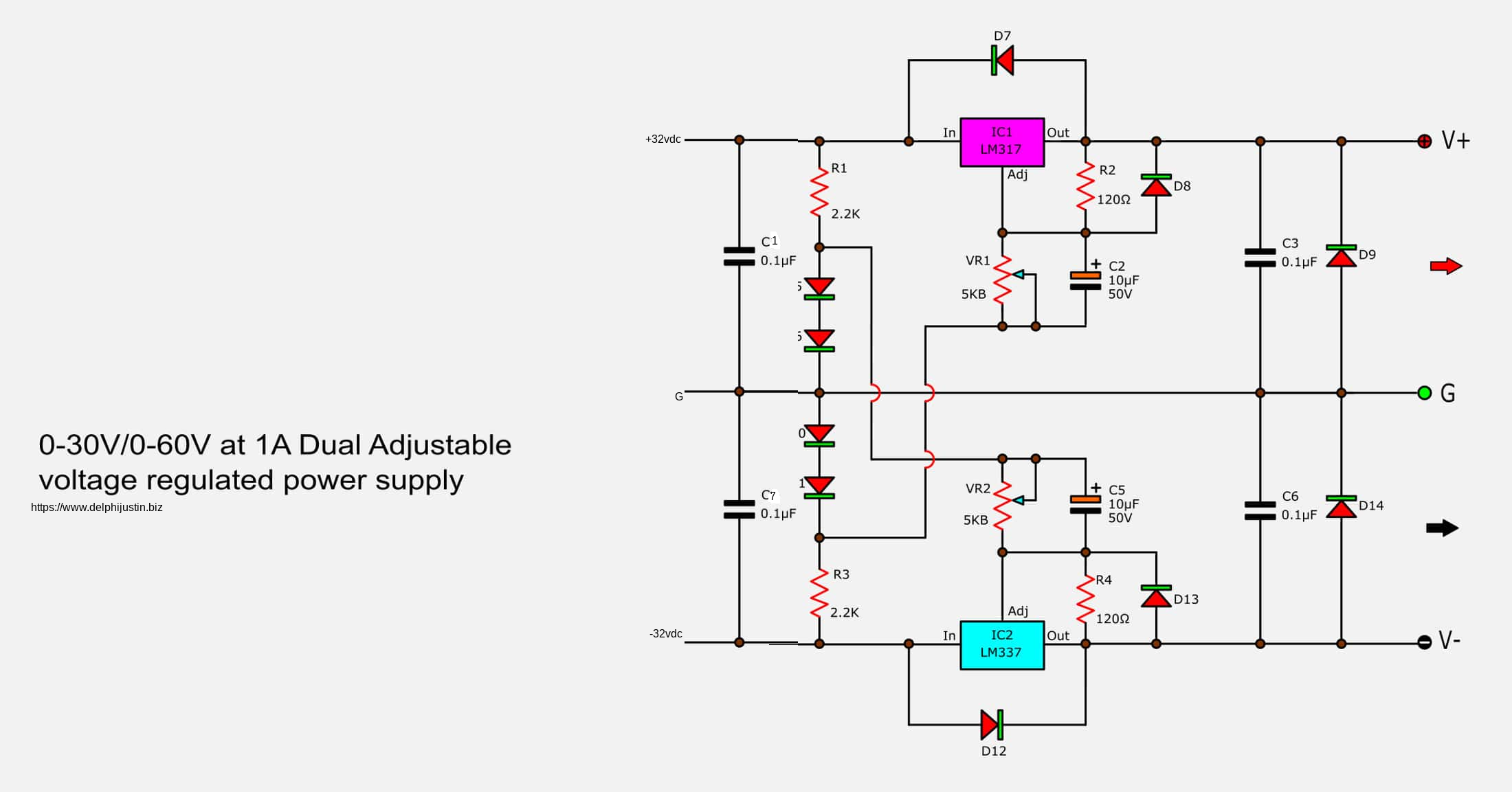
Here’s a type of powersupply you should have. It’s good if you’re dealing with OP amps. I took the circuit from eleccircuit.com and modified it to incorporate 2x printer power supplies instead of an AC transformer. It provides a ground that are both positive and negative. LM317 and LM337 regulators are utilized in this circuit. They are the main components of the circuit. It uses 2 diodes and a 2.2k 2W resistor for each regulator’s adjustment to 0v. It has 3 diodes for each regulator to be used as its protection diodes like capacitors and short circuits. The two 5K potiometers adjust the output voltage at each output. Printer power supplies are perfect for this project since their voltages are not too high or low.
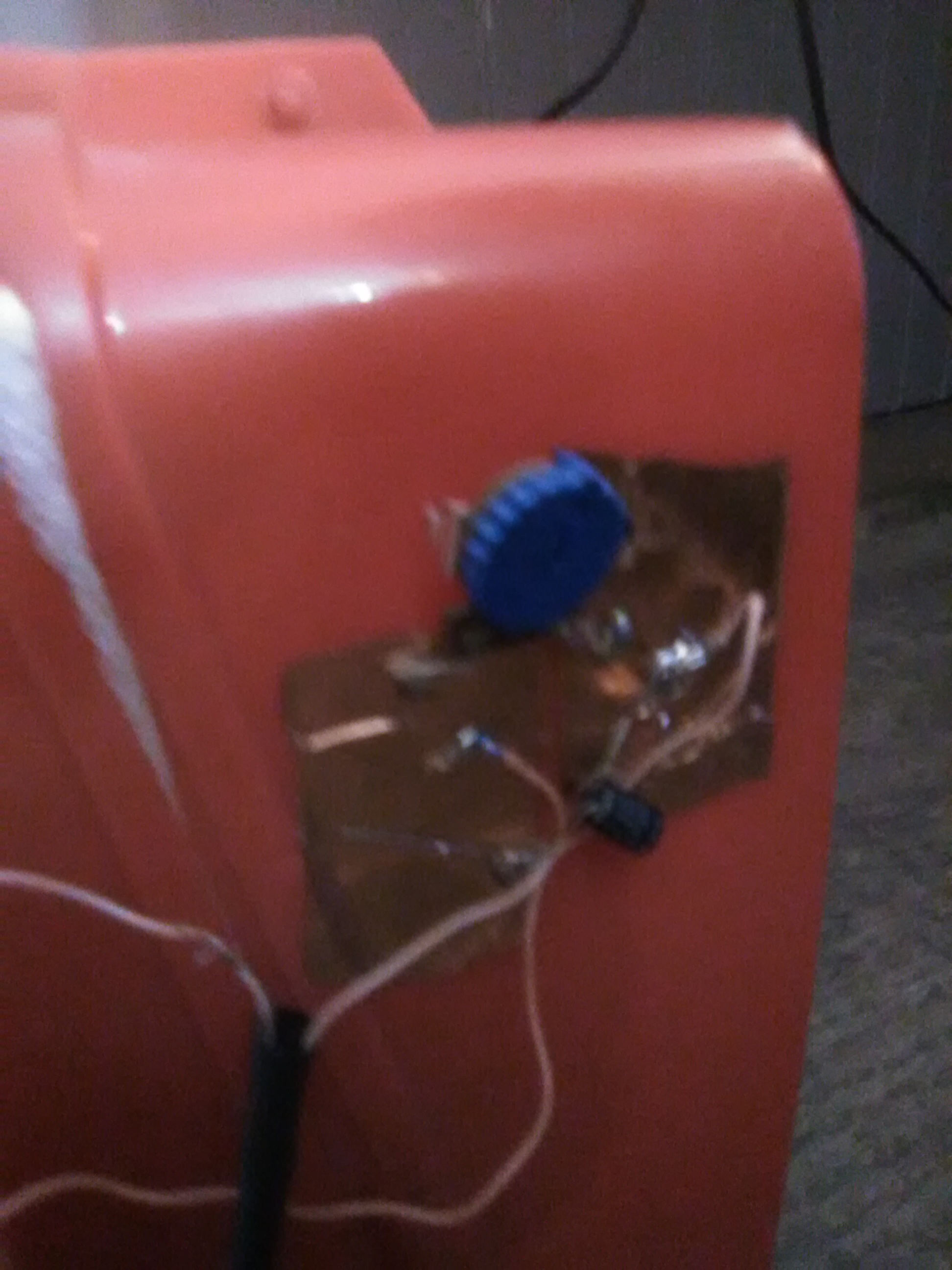
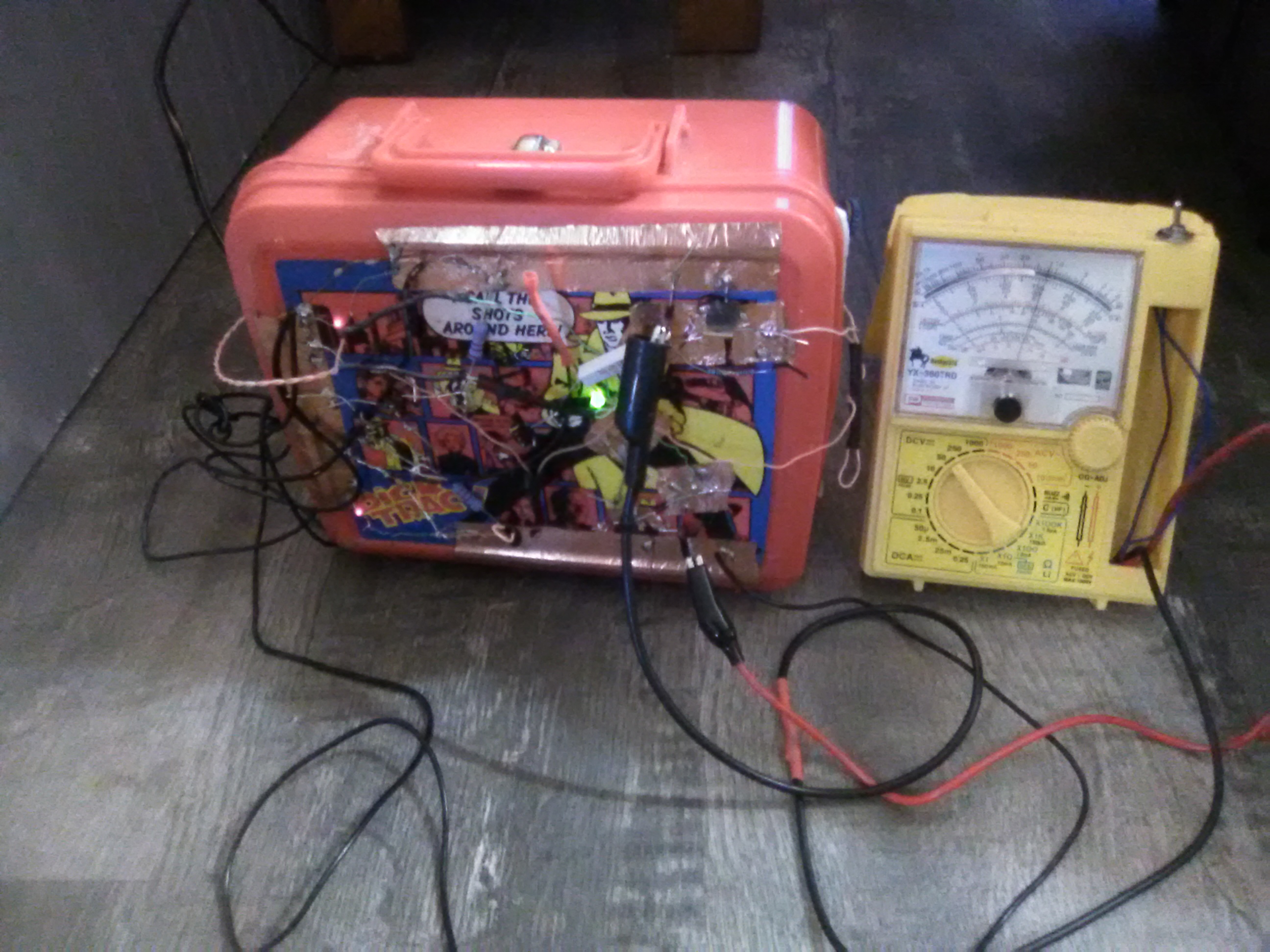
The project is built on a dick Tracy lunch box. With the printer power supplies inside with a c7 power cord splitter. It uses LM317 and LM337 to provide both positive and negative voltages. Here’s a joke: So I guess that means the LM317 and the LM337 are like the yin and yang of electronics!
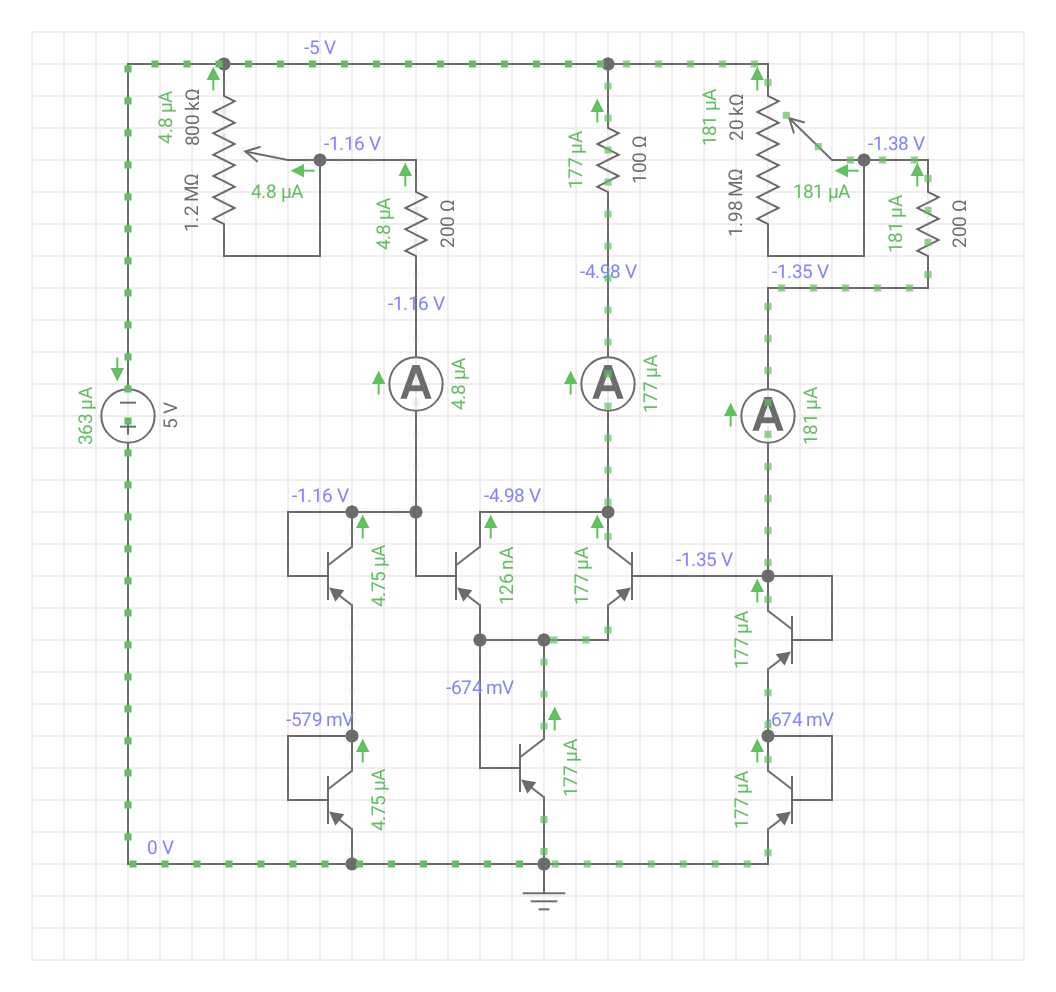
Here’s a circuit that Joerg from the electronics chat shared with me. The circuit outputs a current and inputs a current for the variables in the Pythagorean equation. Pythagorean theorem solves for the hypotenuse of a triangle. The currents in the circuit are the same way
Equation for this circuit
where C is the hypotenuse in amps I(A) is side a in amps, I(B) is side b in amps
The circuit I made is using PNP Transistors, it can use NPN but the power supply polarity must be reversed. It uses 7 transistors, and most of them they have collector and base tied together. The circles with “A” in it are where you need to measure the current and C is in the center the 200 ohms are current limiting resistors that protect the variable resistors and transistors from drawing too much when set too really low resistance.
circuit built on a small piece of floor tile and copper tape
This script simply creates files onto the flashdrive to see if it is a real flash drive or fake. All files created by this script should all be the same. It works with all OSes that support PHP. NOTE THIS TOOL IS NOT MADE TO BE USED FROM A WEB SERVER. Batch file is included for windows(with the files needed to run the tools). And shell script for linux. Just run the batch file, with no parameters and follow the instructions on the screen. If the Visual C++ Runtime is installed(Windows only) then it should work without admin rights. Depending on how big the flash drive is the test may take a few hours
Fake 512GB drive, it is probably a 32GB flash drive
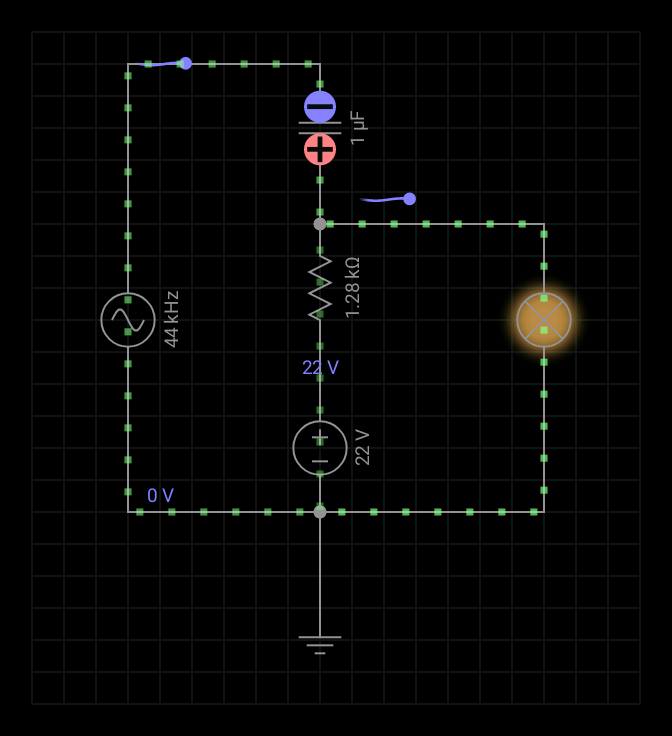
Heres a simple circuit that takes a audio signal(from ham radios,computers or cd players) and converts them into a telephone signal. It powers the phone line with 22vdc(It doesn’t have to be 22vdc, different voltage means different resistor is needed). The phones can run as high as 48v. If you use cordless phones the converter will still need power. WARNING DO NOT CONNECT THIS TO A REGULAR TELEPHONE LINE OR LANDLINE THOSE LINES PROVIDE AC AND THE CAPACITOR WON’T BLOCK THE VOLTAGE. THIS CIRCUIT IS TO TAKE AUDIO FROM THE HEADPHONE JACK AND INJECT IT INTO CORDLESS PHONES WITHOUT A TELEPHONE COMPANY. I use mine to listen to IRC chat 1000ft away from my computer. This could also work with corded phones. I believe you connect them in series, where the lamp is. I don’t have any corded phones to experiment with, the resistor may need to be lowered for 2 corded phones. I tried connecting two cordless phone bases together but the handset said No Line and also you could hear them or hear the tone when you press number buttons. When I made this circuit the No Line message went away and you could hear the computer and tones for the number buttons could be heard.
The capacitor should be no more than 1uF of capacitance and non-polarized. And yes the cord is safe to touch since its not hooked up to a real phone line. The resistor should be 1/2W instead of 20W. I had extra of those so I used it.
In the circuit diagram the 44KHz is the Audio Signal and the lamp is the phone
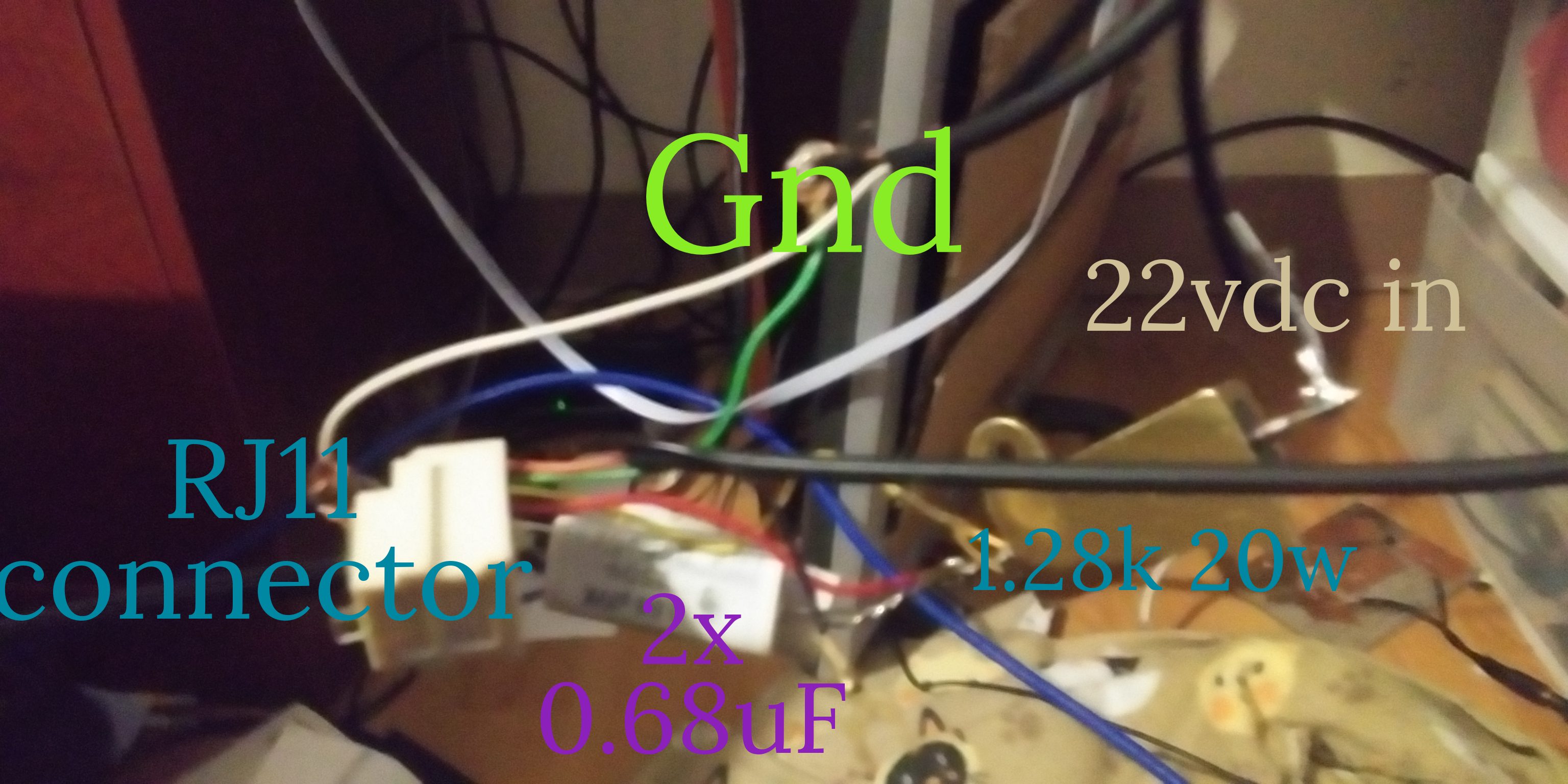
The way I wired it. Part of the audio cord is behind the RJ11 and the other one by GND
The schematic
I have two cordless phones but no splitter or second RJ11 connector. I will try talking over them when I get those stuff
Textbelt bouncer plugin for mIRC Chat client This is a plugin that lets you access IRC over texting. I wanted something for my phone that I would not having to open a app everytime my phone starts.
System Requirements
For compiling you will need Delphi 4.0 with TmIRCControl
A Textbelt API Key(you will have to buy credits)
mIRC Chat client (This app is shareware and only have to pay it once)
To use open smsbot.bat it will start mIRC if its not running
Make sure you checkout help.bat
Anything not working or need help just visit the forum by clicking Help >> Support Forum Or just get on IRC delphianserver.com #delphijustin
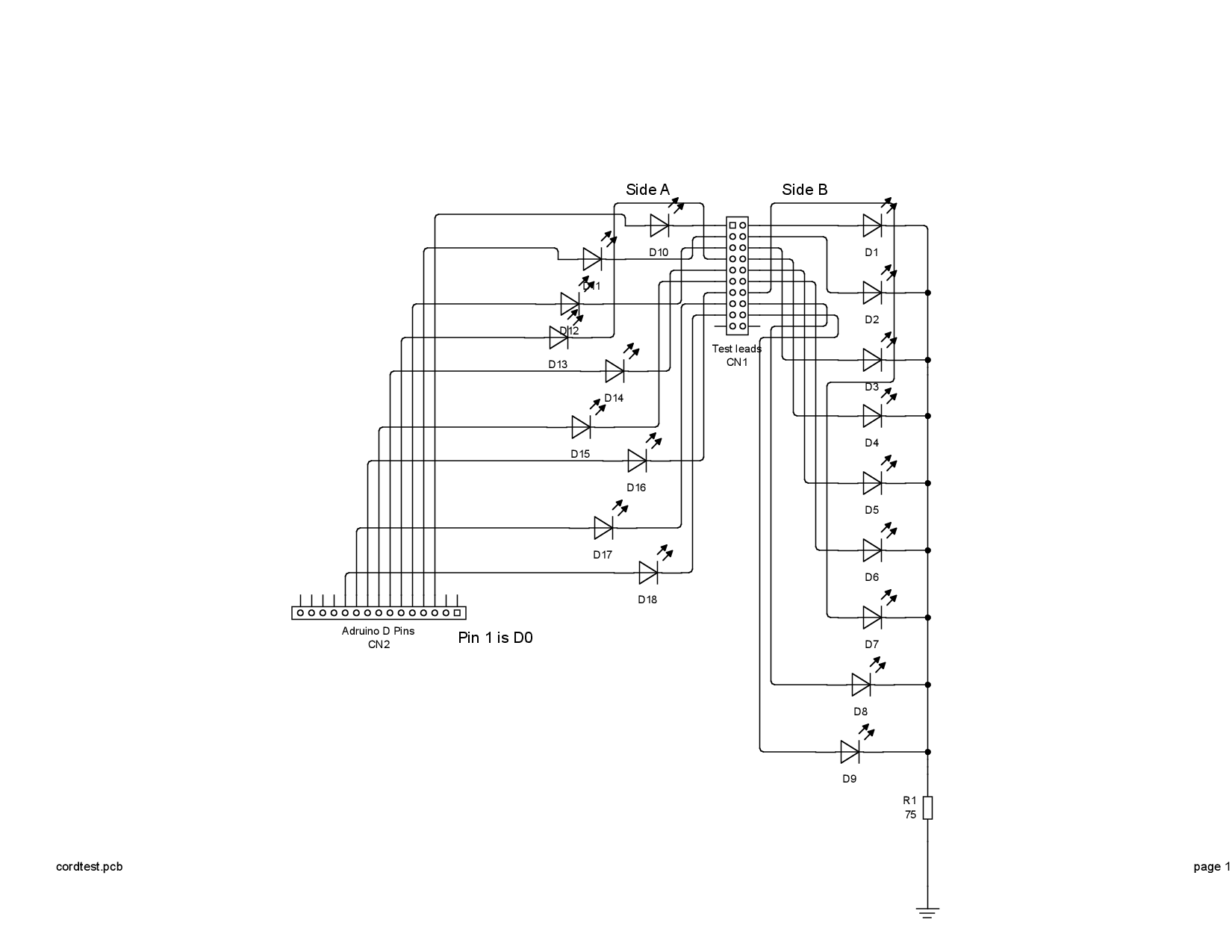
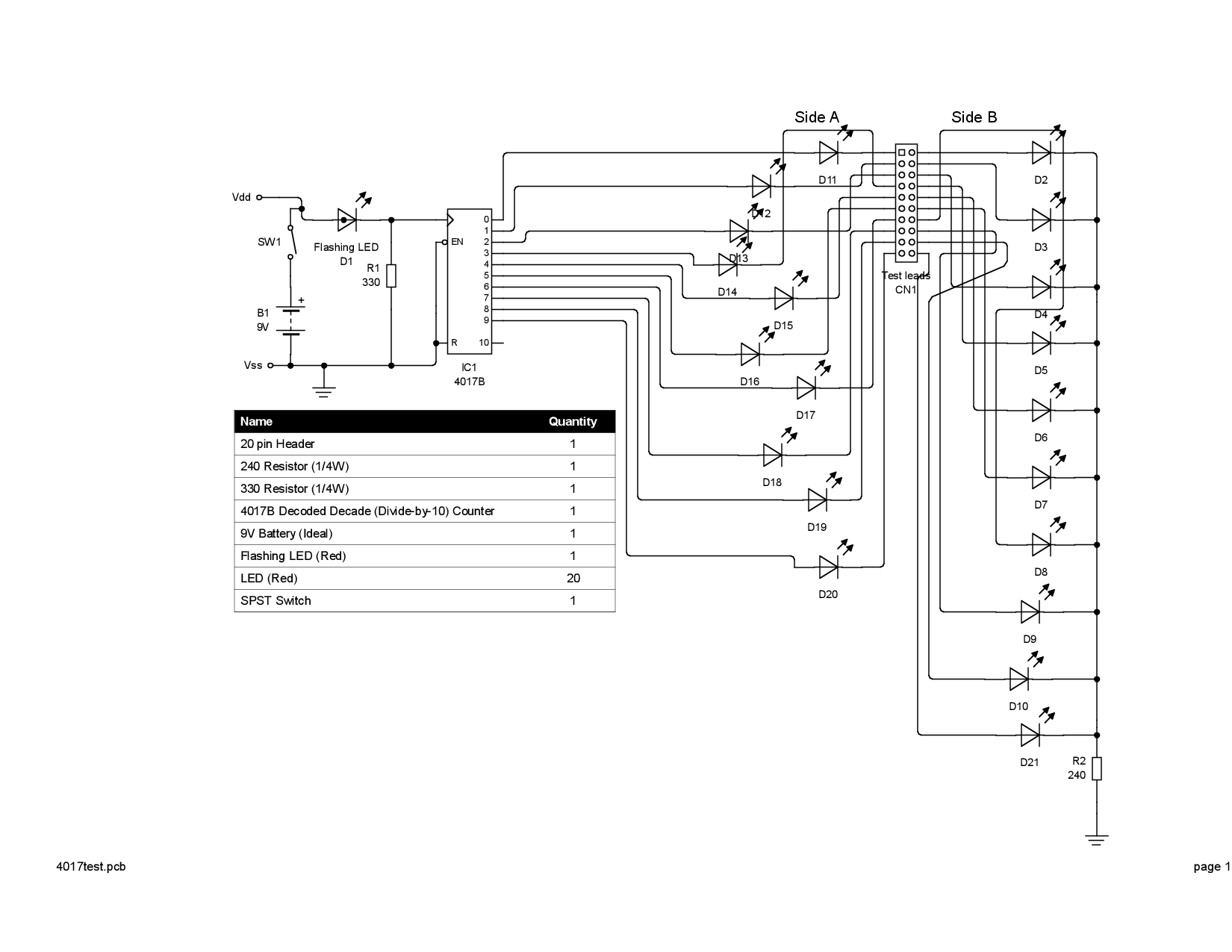
In this blog I will show you two ways to make a cable tester. The 1st way uses a arduino (software controlled). The 2nd way uses a decade counter chip(CD4017) and a flashing LED. I am going to order the Dual RJ45 jack to screw terminals from eBay. The other connectors are from parts-express. I couldn’t find one that would tell you that it has screw terminals on parts-express. But starting from 2 dollars off of eBay you couldn’t go wrong! The screw terminals allows secure connections from other types of cords, such as USB and TV coax, whereas punchdown would not be a good choice. The reason for that is each pin on the RJ45 connector will be tied together with the usb cable, coax and rca cables. This tester will tell you which pin on one side is wired to on the other side, tells you if there’s no connection and tells you about any shorts. I ordered connectors that were attached to a cord so that soldering will be easier. It’s basically a LED chaser with two of LEDs in series one for side a and the other one for side b. You can find the arduino code on github. To use simply connect one side of the cord to side a and the other to side b
arduino circuit
4017 chip circuit
Once the parts come in a YouTube video will be uploaded
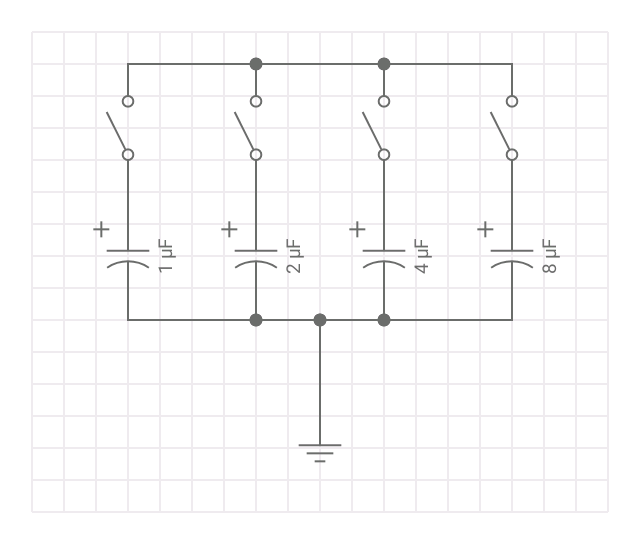
In this blog I will show you how to make a dip switches capacitor substitution board. Its very simple since capacitors add up in parallel. So if you look at the schematic you will get an idea.
delphijustin Industries is an Autism Supported Business







 Circuit Simulator