This tool executes a batch script once during the whole time the computer is on. It can limit one instance running at a time. Check the process ID in the registry to see if it is still running. All Keys that are used for telling if it should spawn a new process are volatile, meaning they are in memory not on the HDD. This tool works on Windows XP or higher or Server 2003 or higher. This tool is great for Citrix users and Terminal server users, where the startup apps can execute more than once. For server programs(like UnrealIRCd) where it creates a TCP/UDP port(yeah this could be a problem with putting it in startup and have two people under the same account logon).
All programs are virus free. Some antivirus software might say its "suspicious" or a "Potentionaly Unwanted Program". Some of them rate them on what there code looks like no matter if theres a definition in the virus database. If any of them are detected any Antivirus I will zip the software with the password "justin" j is lowercase
To see how to use it just open it with no parameters
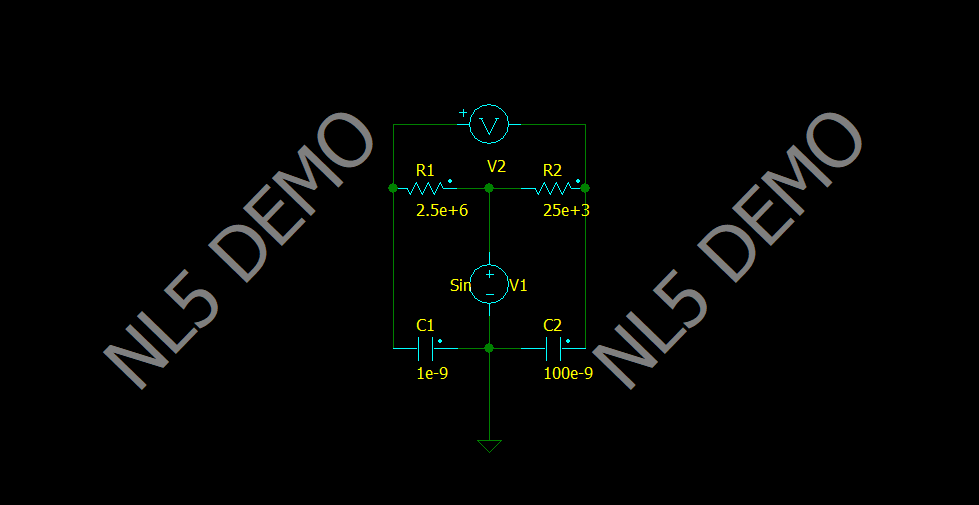
This bridge is good for measuring Capacitors. What you do is hookup high impedance headphones to the output(V2 in the NL5 Circuit). Then adjust the resistor(s) , you can use the calculator below to find a suitable resistance for the resistors. This works like a Wheatstone bridge except one side has capacitors. The calculator calculates the unknown capacitor/resistor when the bridge is balanced. The resistors should be high and so should the function generator frequency and amplitude. The bridge is balanced when close to 0 volts is going through the headphones.
The following equation is used for figuring out the unknown capacitor(C1) when balanced. I used yacas to rewrite the equation for the other 3 variables.
$$C_{1}=C_{2}\frac{R_{2}}{R_{1}}$$
The equation will show up once MathJax loads
Notes about this project:
This circuit requires a high impedance headphone(like ones designed for crystal radios) I tried it with headphones and it was quite loud for it to be balanced. I think this was because that it is sensitive to weaker signals.
The frequency will need to be high, so it will not work with AC Step down transformers.
This trick probably work best on a oscilloscope. With a oscilloscope you can use frequencies higher than sound frequencies so. Plus at lower capacitance the low current will not throw off the balance point.
It is probably best ti use a resistor substitution box instead of a pot. This is because with a single turn pot the resistance is hard to find and if the resistance goes below a certain level it can look like you found the correct resistance even when it is not.
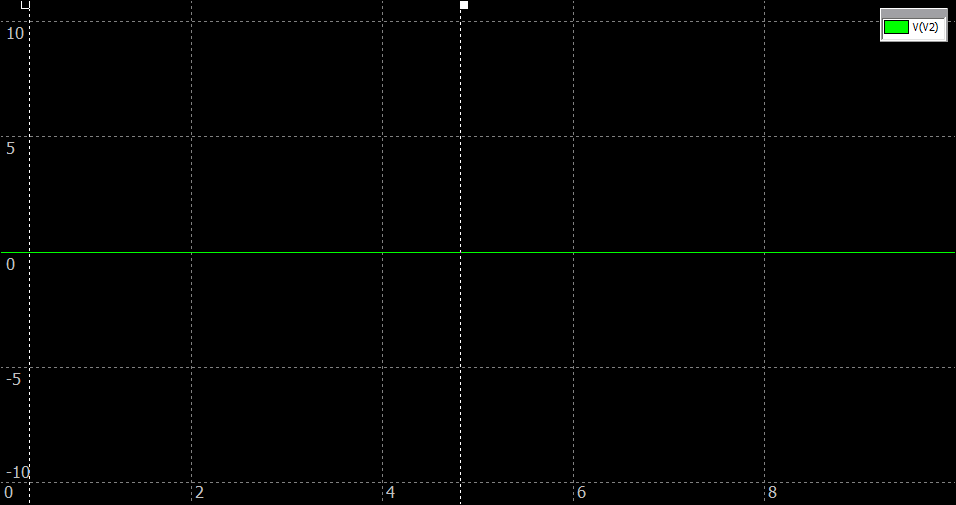
With the bridge being balanced you can see it is really close to zero.
Balanced Graph
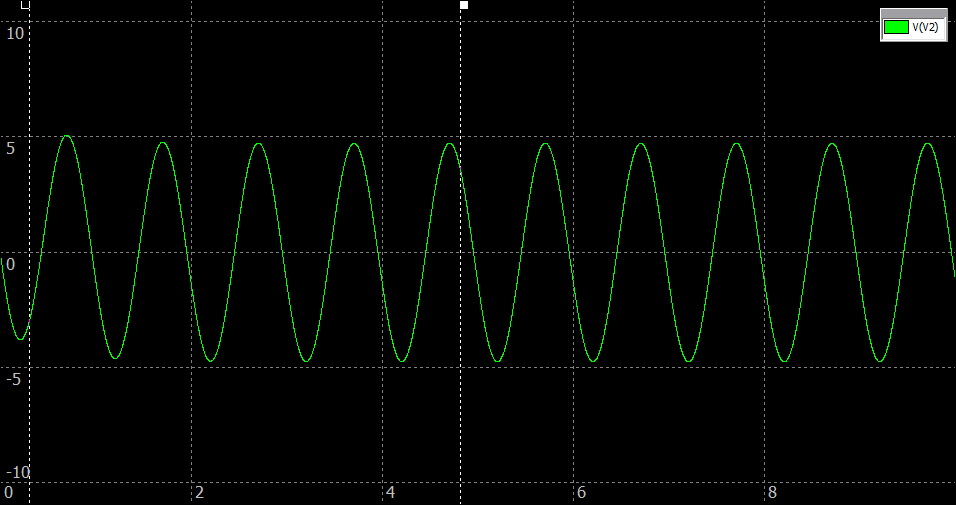
Here it is again but this time unbalanced
Unbalanced Graph
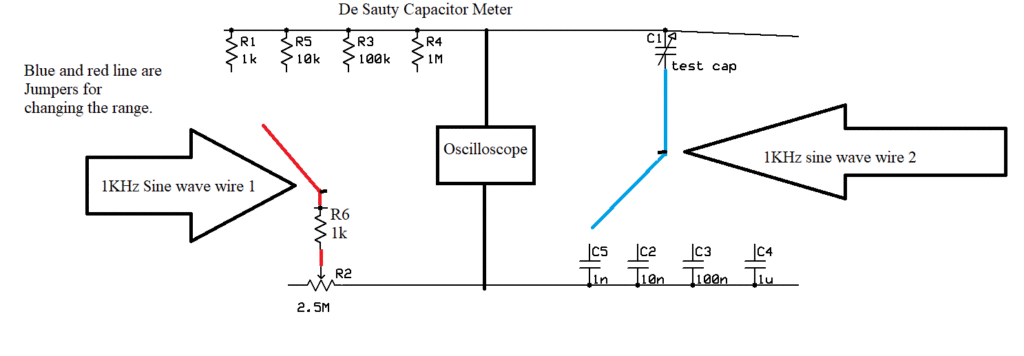
For this project we will use reference capacitors values 1nF 10nF 100nF and 1µF. R2 should be high as possible.
program desauty;
uses sysutils;
var c1,c2,r1,r2,cr,rr,ar:extended;
s:string;
label calculate;
begin
	calculate:
	c1:=0;c2:=0;r1:=0;r2:=0;
	write('Enter C1:');
	readln(s);
	if length(s)>0 then c1:=strtofloat(s);
	write('Enter C2:');
	readln(s);
	if length(s)>0 then c2:=strtofloat(s);
	write('Enter R1:');
	readln(s);
	if length(s)>0 then r1:=strtofloat(s);
	write('Enter R2:');
	readln(s);
	if length(s)>0 then r2:=strtofloat(s);
	if c1=0 then c1:=c2*r2/r1;
	if c2=0 then c2:=(c1*r1)/r2;
	if r1=0 then r1:=(c2*r2)/c1;
	if r2=0 then r2:=(c1*r1)/c2;
	cr:=c2/c1;
	rr:=r1/r2;
	ar:=cr-rr;
	Writeln('C1:',floattostr(c1));
	writeln('C2:',floattostr(c2));
	writeln('R1:',floattostr(r1));
	writeln('R2:',floattostr(r2));
	writeln('CRatio:',floattostr(cr));
	writeln('RRatio:',floattostr(rr));
	Writeln('ARatio:',floattostr(ar));
	if abs(ar)<2 then writeln('Balanced')
	else writeln('Unbalanced');
	write('Press enter to calculate again...');
	readln;
	goto calculate;
end.
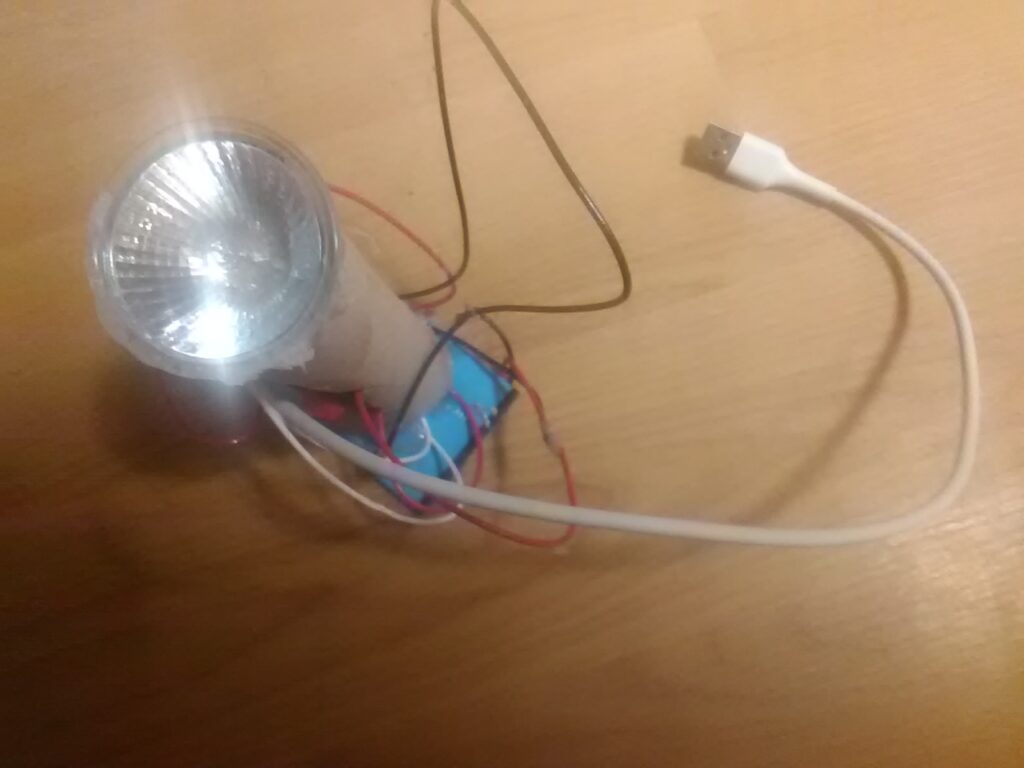
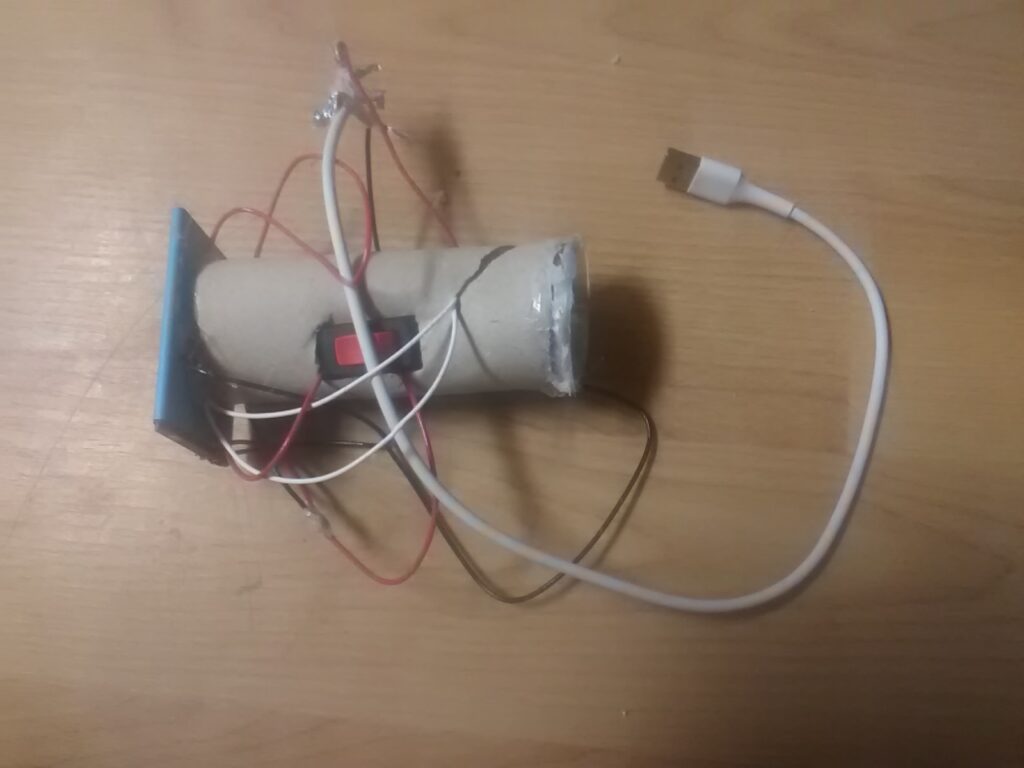
This flashlight is very simple to build. It uses a cellphone li-ion battery . Its rechargeable. It should only draw about 900mA from the battery. It lasted for about 74 minutes before it went too much below the light bulb voltage. I measured it while the light was off after it went dead it read 3.27v and while running little bit above 2v. It is best practice to not leave it on after it dies because they cannot go below 2v.
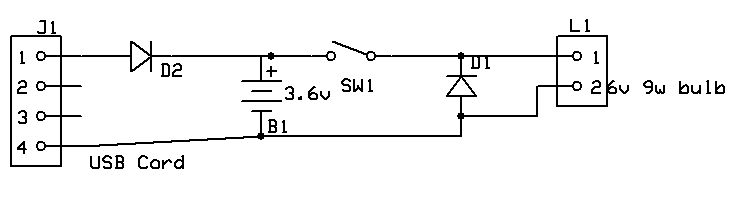
Circuit diagram
On the circuit D1 protects the USB port from any inductive spikes. D2 blocks the battery voltage going back to the power supply, plus drops the voltage to a safe level since most cellphone batteries have built-in protection circuit.
Download IRLib2 and unzip the following folders to <ArduinoPath>\libraries If they are installed correctly you will see IRLib2 in the examples section of Arduino IDE.
IRLib2
IRLibFreq
IRLibProtocols
IRLibRecv
IRLibRecvPCI
2. Download TelnetRC.zip and modify telnetrc.ino to use your remote controller. There’s even a plugin that let’s you use Unreal DVR to schedule shows
3. Calibrate the program by using the rawRecv tool that comes with IRLib2. You can find it by looking in Examples menu under IRLib2.
4. Wire up the receiver module with Pin 3 of the receiver connected to pin 2 of the Arduino.
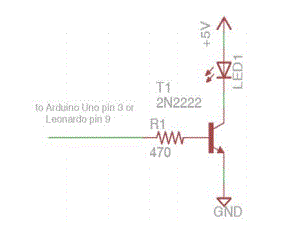
5. Upload telnetrc.ino with the new calibrated variables. Then solder up this circuit(for nano it is pin 3):
I looked all over the internet for a way to mount these solar cells, And only come up was ones you mount on houses. So I got a cardboard box and glue gun and tried gluing them to the piece of cardboard and it was a success! I got 19 of the 0.5v 0.8A solar cells from all electronics. They work great outside, I get around 11v. Inside there’s not enough current/voltage to run the panel meter. I got about 6v in the bathroom with it being really
All glued to the cardboard
I think for right now it doesn’t charge the phone correctly because I have the green and white wires on the USB Cord tied together. A friend told me that I need resistors on the data lines. So I looked online and came across this circuit and says it will tell the phone to draw only 500mA.
Circuit for changing
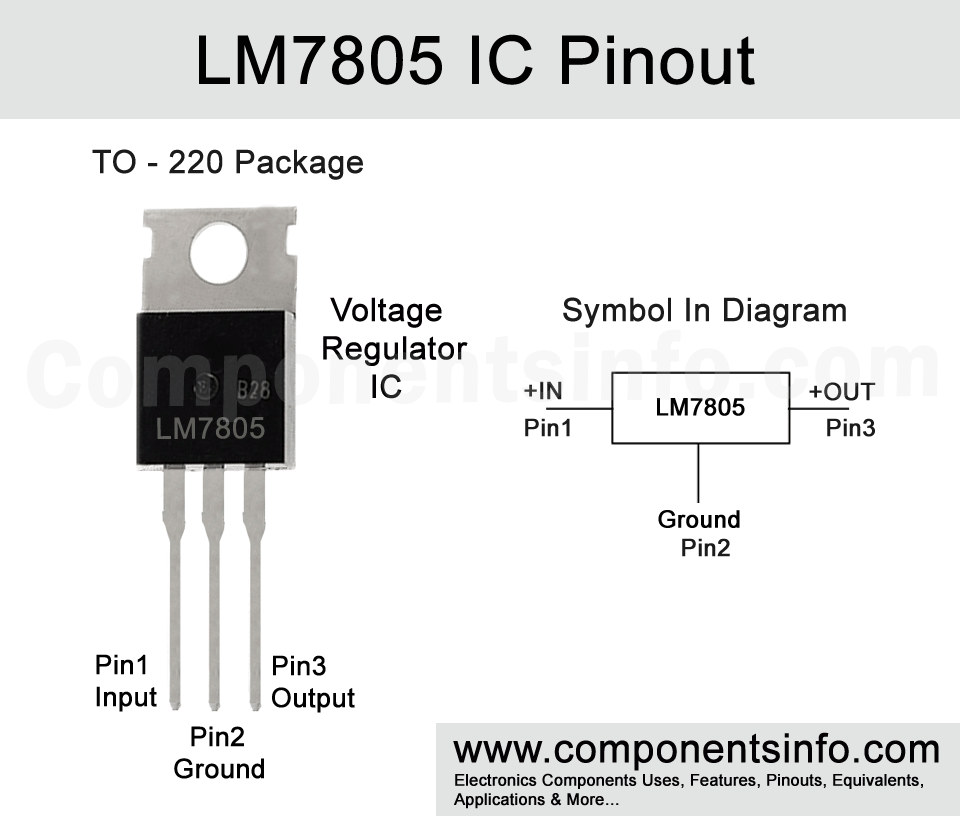
I will have to wait for the resistors to come in the mail to test it with the resistors. Down below is the pinout of the regulator I used. Just that and the 19 solar cells. Each solar cell is conneted in series(the same way batteries are connected).
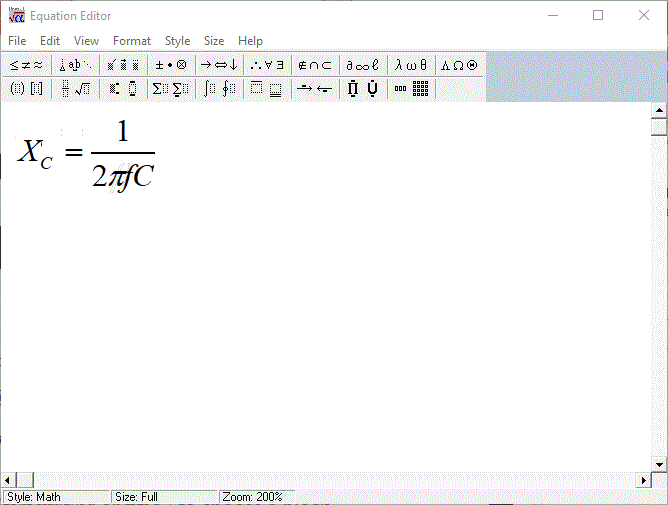
In this blog I will show you where to download EQNEDT32.exe file. The Microsoft equation editor tool. It was taken out of the new versions of office and windows.
Then scroll down until you see Download EQNEDT32.EXE Files (Malware-Tested 100% Clean), choose the correct version of Microsoft Office and processor type(32-bit or 64-bit) and then open the file and office should open the installer for equation editor, you may need the the office CD.
Headphones made today goes bad and doesn’t last as long. It is because of the crap quality wire they use. It’s very thin. Why the 3.5mm to RCA cord use better wires than it.
Here’s a list of symptoms of when headphone are going bad:
One or two speakers only sound good when the cord is push in or pulled a certain way
It sounds like its under water or sounds filtered.
When the cable moves the sound disappears
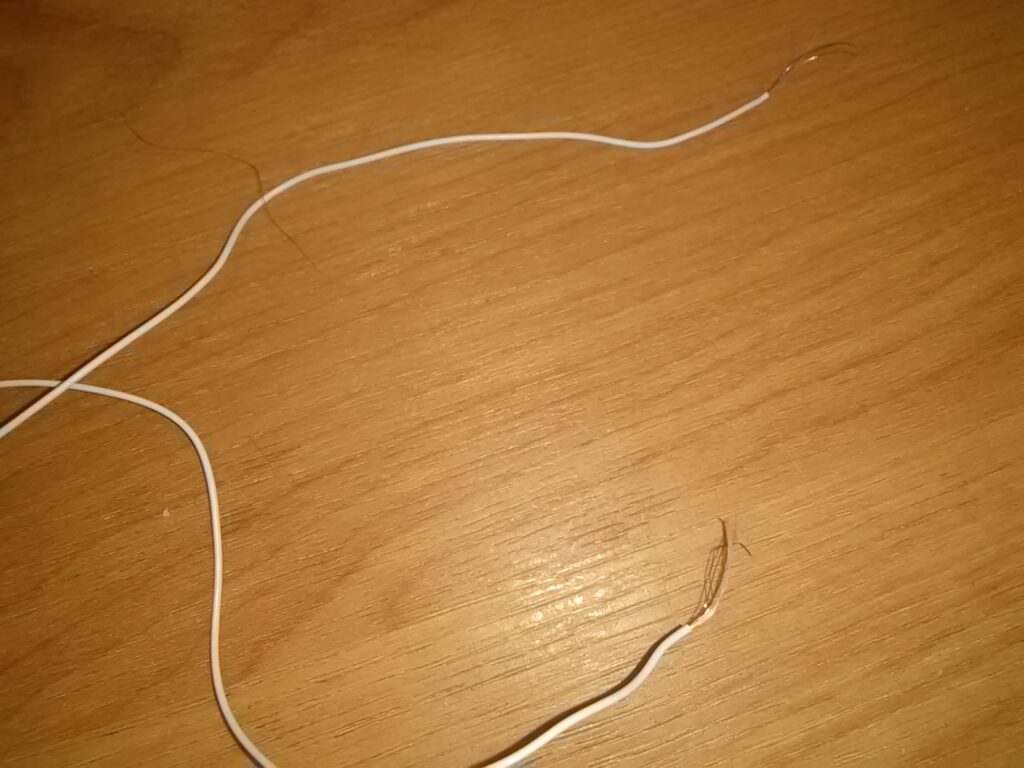
I gotten a earbuds from eBay once and they didn’t last a month. So to figure out why they didn’t last long I cut and stripped the cord. Boy was I disappointed! There was only one strain of wire for both positive and negative wire.
The wire inside of my broken headphones
Here’s what you can do to help prevent it
Buy new headphones. Make sure they are the 2-cord molded in one cord(like a 3.5mm to RCA cord)
Take apart the broken one and solder the a thicker wire.(That might be hard to do,but it is easier than the cheap stuff they use now a days)
Get Bluetooth headphones. This is probably the easiest, but more expensive plus the headphones take batteries.
The headphones I plan on getting are from Scott for 14 dollars. They look like this:
Headphones
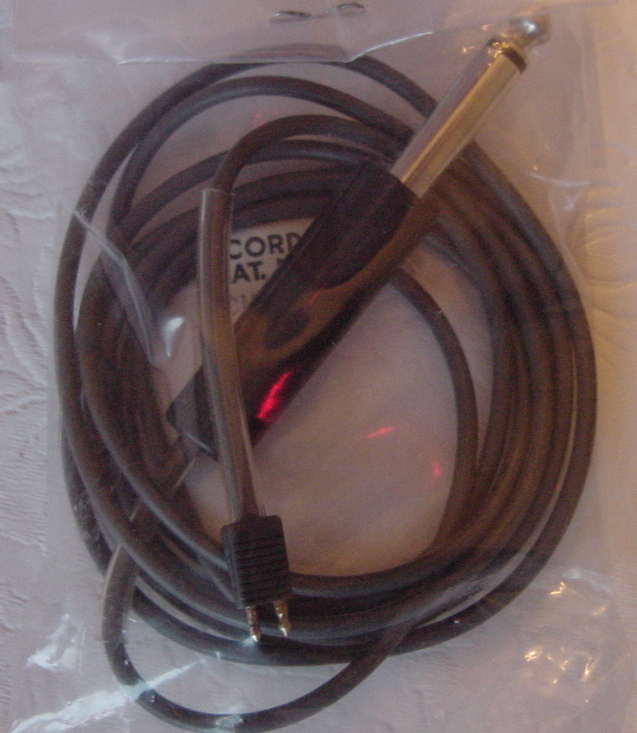
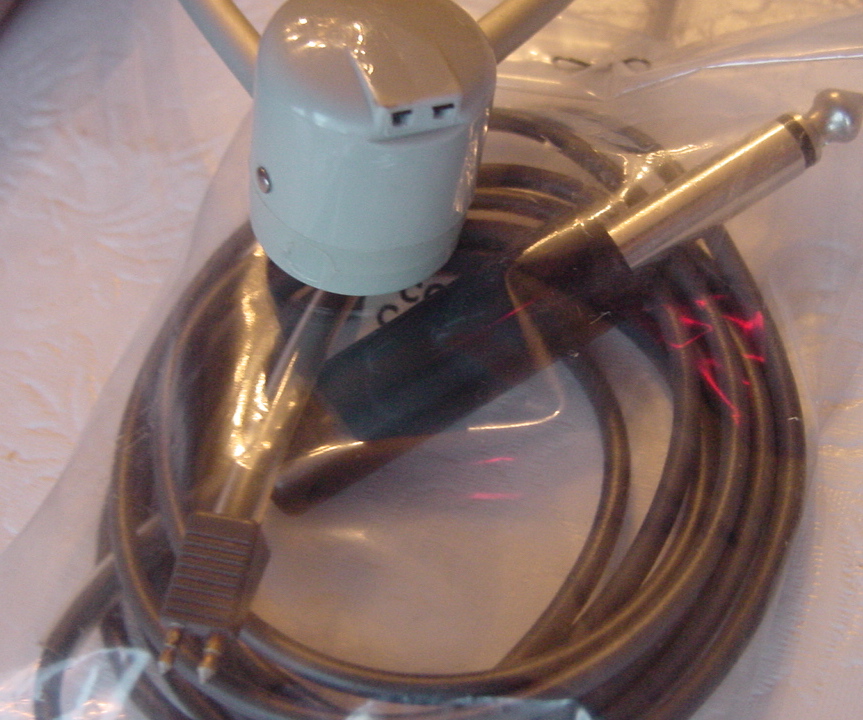
There is 2 pinholes for the cable. So you may be able to make your own cord or replace it if it goes bad. The headphone has a impedance of 128 ohms. He has other ones two with thick cables.
Headphone cordHeadphone cord and the pinholes on the headphones
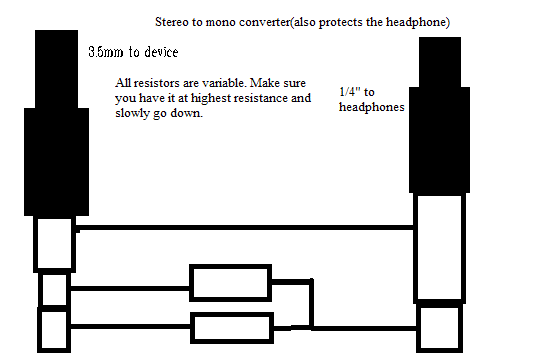
Here is the circuit for driving a crystal headphone it will use a current limit resistor. The good news is the headphones I’m using is 128 ohms impedance so its closer. The resistor depends on the impedance of headphones. It is probably best to get a high resistance trimpot so you can start at the highest resistance and go down until the volume is perfect. You will want to make sure you solder the 2 wires on each pot the same, doesn’t matter which as long as you solder the middle pin and one of the side pins and they are the same on both. To test it you will want measure the resistance on the left and right channels only(between not ground) and make sure that it is trimpot resistance times 2.
Circuit diagram
I will try it with part of paper clips soldered to a thick 3.5mm to RCA cord(cut and stripped of course) and see if that works. I might be able to tape the paper clips to the headphones to make sure that they stay in place. But the looks of the cord it may be good quality. But to make sure of remaking the cord is easy. I decided to use a 3.5mm to RCA cord. The total cost is $30.87 including the cost of shipping and from all electronics parts and Scott’s headphones but it should work, I will update this post when I actually test it. The parts will be ordered after December 8th.
This switch is a must for people who solder alot. It prevents the iron from overheating. Its very simple and is very cheap. Some irons like mine can heat back up fast after they have not been cooled down alot.
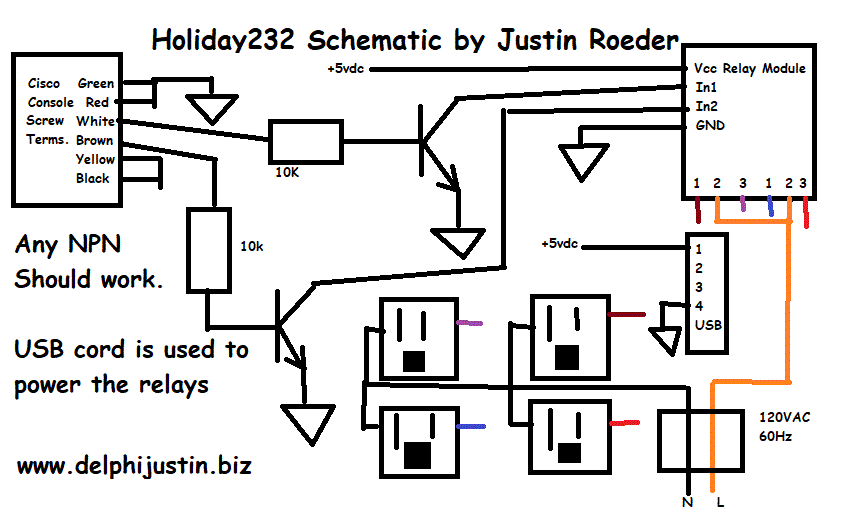
In this post I will show you how to flash Christmas lights by the serial port. Now you can with Holiday232. This serial port can switch between 4 different lights by using 2 SPDT relays and both RTS and DTR of the relay. As you may be wondering when looking at the schematic why I’m using transistors and resistors. It is because the serial port voltage is higher than 12vdc. I don’t know what the forward voltage or current plus since there is a LED in series with the optocoupler.
The following things are required(for both DTR and RTS):
Transmit and Receive. Tie together so it makes it easy to find the serial port(2 and 3)
White(7)
DTR(4)
Brown(8)
RTS(7)
Red and green(4 and 5)
Ground(5)
Cisco console cable on screw terminals pinouts
All programs are virus free. Some antivirus software might say its "suspicious" or a "Potentionaly Unwanted Program". Some of them rate them on what there code looks like no matter if theres a definition in the virus database. If any of them are detected any Antivirus I will zip the software with the password "justin" j is lowercase
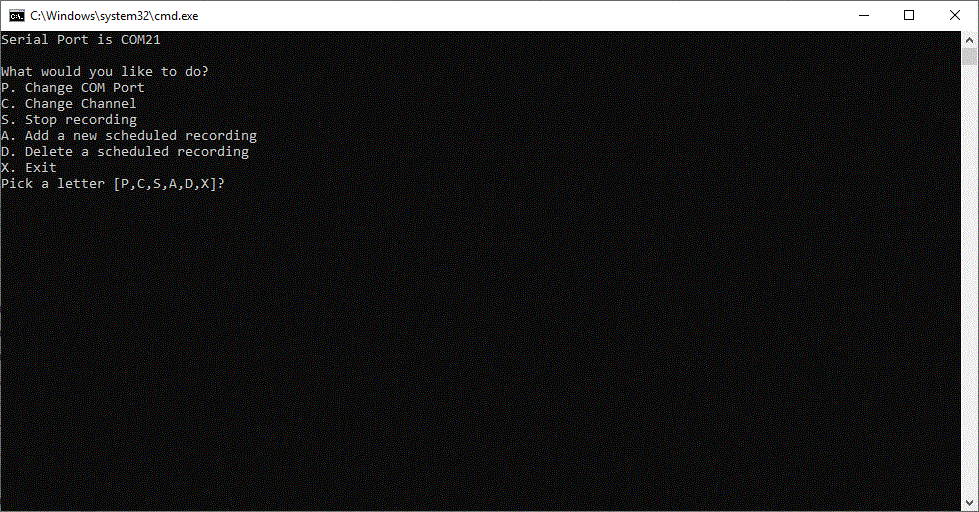
Here is a app I made that makes Unreal Archival Server much better. It allows you to record at a certain date and time and moves videos to a certain location with a better filename. It’s free and open source. However its not made by Unreal media server. And the app is a batch file.
Screenshot of Unreal DVR
Before running Unreal DVR you must do the following
Open patch-uas.bat file after Archival server is installed
Schedule a recording time in archival server(not Unreal DVR) to start at 00:00 to 23:59. This is needed so when Unreal DVR starts UArchivalServer it starts recording.
Set the maximum duration to 1440 minutes, this is 24 hours. This will make it where Unreal DVR can create a video at a unlimited duration. You can do this by clicking the Storage settings button
After that upload remotecontroller.ino to the Arduino(if you want the ability to change channels)






 Circuit Simulator